
Tree Risk Management

Tree risk management
Proportionate and Professional Tree Risk Management
Trees provide considerable environmental, ecological, landscape and amenity benefits, but as living organisms they can naturally shed branches or occasionally fail. Tree risk management is therefore not about eliminating all risk, but about identifying and managing significant risks in a reasonable and proportionate manner.
Kirkley Tree Care Ltd provides independent tree risk assessment and management advice for organisations, landowners and those responsible for trees. Our approach considers the condition of the tree, its location and the people or property that could be affected, allowing management decisions to be proportionate to the level of risk.
Our approach reflects the nationally recognised guidance of the National Tree Safety Group (NTSG), which promotes a balanced approach to tree safety that recognises both the duty of care owed by tree owners and the considerable benefits that trees provide.
Understanding the risks
The overall risk to people from falling trees and branches is extremely low. National Tree Safety Group (NTSG) guidance records that there are typically fewer than five deaths each year in the UK caused by falling trees or branches.
While the level of risk is very low, those responsible for trees still have a duty to take reasonable care. Effective tree risk management therefore requires a balanced and proportionate approach, directing inspection and management towards trees and locations where the potential consequences of failure warrant greater attention.
Our Tree Risk Management Process

Occupancy and Site Zoning
Understanding how a site is used is an important part of proportionate tree risk management. Areas can be assessed according to their level of occupancy, allowing inspection and management resources to be focused where the potential consequences of tree failure are greatest
- Higher Occupancy Areas - frequently used locations such as busy roads, entrances, car parks, playgrounds, well-used paths and areas close to occupied buildings.
- Moderate Occupancy Areas - locations subject to regular but less frequent use, where people or property may still be present.
- Lower Occupancy Areas - Areas with infrequent public access and limited exposure of people or property.
A

Tree Risk Management in Schools
Schools and educational sites require particular consideration because trees are often located alongside playgrounds, paths, entrances, sports areas, car parks and other frequently occupied parts of the site. A proportionate approach should consider both the condition of the tree and how the surrounding area is used.
Kirkley Tree Care Ltd has extensive experience of surveying trees within schools and educational establishments. Our approach focuses attention on areas of greatest occupancy and potential consequence, while recognising the considerable environmental, educational, landscape and amenity benefits that trees provide within school grounds.
Where significant defects are identified, appropriate management, monitoring or further investigation can be recommended according to the circumstances. Inspection frequencies should be appropriate to the site, tree condition and level of occupancy rather than applying a single fixed interval to every tree.

Regular Inspections
An appropriate inspection regime is an important part of effective tree risk management. The frequency and level of inspection should be proportionate to the nature of the site, its level of occupancy, the tree population and any known defects or changing circumstances.:
- Assessing tree condition and identifying significant defects
- Recording trees requiring specific management or further investigation
- Prioritising works according to the level and nature of risk
- Establishing appropriate monitoring and reinspection intervals
- Additional inspections may also be appropriate following significant storms, site changes or other events that could materially affect tree condition.
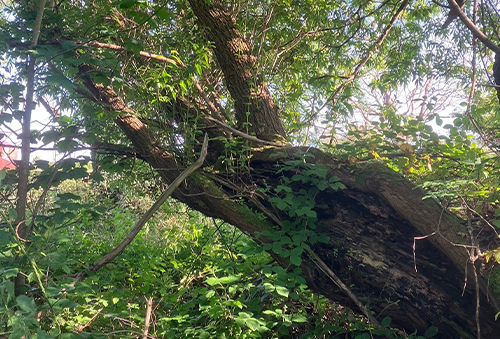
Risk Control Measures
Where an inspection identifies a significant tree-related risk, the appropriate response should be proportionate to the nature and level of that risk. Measures may include:
- Appropriate pruning or other remedial tree work
- Further investigation, including decay detection where appropriate
- Managing access or occupancy around the tree
- Monitoring and reinspection where appropriate
- Tree removal where the risk cannot reasonably be managed by other measures
Liability of Site Occupiers
Those responsible for land have a duty to take reasonable care for the safety of people who may be affected by trees on their property. The extent of that duty depends upon the circumstances, including the condition and location of the trees, the use of the site and whether a risk was reasonably foreseeable.
A reasonable approach may include::
- Understanding the nature and extent of the tree population
- Adopting an appropriate and proportionate inspection regime
- Acting upon significant defects or foreseeable risks identified
- Keeping appropriate records of inspections and management decisions
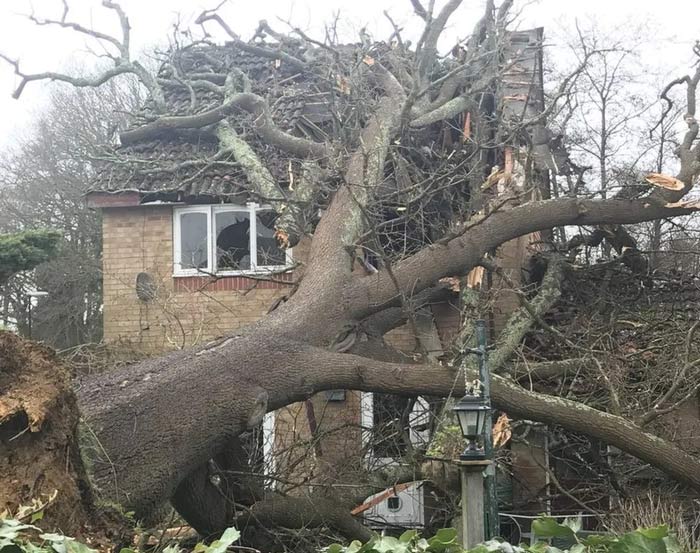

Professional arboricultural advice and assessment from Kirkley Tree Care.
You can call 07921 803775, or email will@kirkleytreecare.co.uk
Kirkley West Farm Belsay, Northumberland, NE20 0DL



Kirkley Tree Care ltd Registered Company Number: 17339324