
Decay Detection
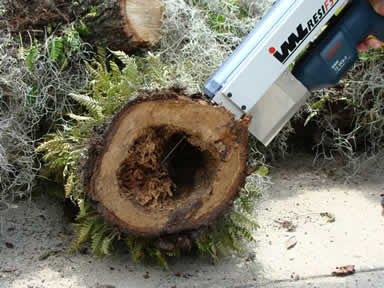
The IML Resistograph:
The IML Resistograph is a specialist diagnostic instrument used to investigate suspected internal decay and deterioration within trees. A fine drilling needle passes through the wood while measuring the resistance encountered, producing a drilling profile for interpretation by the arboriculturist.
The resulting profile can help identify changes in wood density, areas of reduced resistance and cavities, and can assist in assessing the extent of residual sound wood along the drilling path. This provides valuable additional information where the extent of an internal defect cannot be adequately determined by visual assessment alone.
Key features include:
- Investigation of Internal Decay: Helps identify areas of reduced drilling resistance and investigate the location and extent of suspected internal decay along the drilling path.
- Residual Wall Assessment: Can assist in assessing the amount and distribution of residual sound wood where internal decay or a cavity is present.
- Minimally Invasive Investigation: The drilling needle, with a diameter of just 1.5 mm to 3.0 mm, causes insignificant damage to the timber while delivering accurate results.
The Value of Decay Detection
- Supporting Tree Risk Assessment:
Internal decay is not always apparent from visual inspection alone. Where external features indicate that further investigation may be appropriate, resistance drilling can provide additional information about the internal condition of the wood and the extent of residual sound tissue. This helps the arboriculturist make a more informed assessment of the significance of the defect. - Supporting Tree Retention:
The presence of decay does not necessarily mean that a tree requires removal. By providing additional information about the location and extent of internal deterioration, decay detection can support proportionate management decisions and the retention of valuable trees where this is appropriate.

Our Process
1. Initial Assessment
Visual assessment of the tree to identify defects or features that may warrant further investigation.
2. Decay Investigation
Selected areas are investigated using specialist resistance-drilling equipment to record variations in drilling resistance through the wood.
3. Analysis & Interpretation
Drilling-resistance profiles are analysed to identify variations in wood density, areas of reduced resistance, cavities and the extent of residual sound wood along the drilling path. The measured data are then evaluated in conjunction with the tree's species, structural condition and observed defects.
4. Technical Evaluation & Recommendations
section 5The measured data are evaluated within the wider arboricultural assessment to determine the nature and extent of internal deterioration and its relevance to the tree's structural condition. The combined findings provide the technical basis for evidence-led recommendations regarding retention, monitoring, remedial intervention, further investigation or removal where appropriate.
5. Follow-Up & Monitoring
Where ongoing monitoring is appropriate, subsequent assessment can be undertaken at a specified interval to evaluate changes in tree condition. Previous investigation findings and recorded drilling profiles can provide useful baseline information to support comparison and inform future management decisions.

Professional arboricultural advice and assessment from Kirkley Tree Care.
You can call 07921 803775, or email will@kirkleytreecare.co.uk
Kirkley West Farm Belsay, Northumberland, NE20 0DL



Kirkley Tree Care ltd Registered Company Number: 17339324