
Ecology
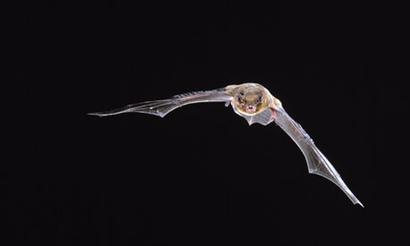 Bats and their roosts are highly protected by UK and EU legislation, even when the bats are absent from the roost. They are also protected from disturbance, which extends to altering the temperature and humidity of a roost. All species of bat and their breeding sites or resting places (roosts) are protected under the Conservation of habitats and species regulations 2010 and Section 9 of the Wildlife and Countryside Act 1981
Bats are the only true flying mammals. Like us, they are warm-blooded, give birth and suckle their young. They are also long-lived, intelligent and have a complex social life. In Britain there are 17 species, all of which are small (most weigh less than a £1 coin) and eat insects.
Bats have evolved a number of unusual features, mainly connected with their ability to fly. Their wings are formed from a web of highly elastic skin stretched over greatly elongated finger bones, the legs and tail, though their thumbs remain free to help them cling on when roosting. Bats have also developed a highly sophisticated echolocation system that allows them to avoid obstacles and catch tiny insects, which they seize in flight or pick off water, the ground or foliage, even in complete darkness. When they're flying, bats produce a stream of high-pitched calls and listen to the echoes to produce a sound picture of their surroundings.
Some bats specialise in catching large insects such as beetles or moths but others eat large numbers of very small insects, such as gnats, midges and mosquitoes. Bats gather to feed wherever there are lots of insects, so the best places for them include traditional pasture, woodland, marshes, ponds and slow moving rivers.
During the winter there are relatively few insects available, so bats hibernate. In September and October they put on weight and then, as the weather gets colder, they seek out appropriate sheltered roosts, let their body temperature drop to close to that of their surroundings and slow their heart rate to only a few beats per minute. This greatly reduces their energy requirements so that their food reserves last as long as possible. Bats don't hibernate right through the winter but may wake up and go out to feed on mild evenings when insects are active.
During the spring and summer period female bats gather together into maternity colonies for a few weeks to give birth and rear their young (called pups). Usually only one pup is born each year. This is looked after carefully and suckled for between four and six weeks until it is old enough to fly out and hunt for itself. Bats don’t build nests and don't bring food back to the roost to feed their young, so the baby lives only on its mother's milk until it is old enough to fly. Once the baby is independent, the colony breaks up and the bats generally move to other roosts. Bats may gather together from a large area to form these maternity roosts, so any disaster at the summer breeding site can affect the whole colony of bats from a wide surrounding area. Many of these maternity sites are used every summer as bats have a strong tradition of returning to the same site year after year.
Legal Protection of bats
Due to the decline in bat numbers, all species of bat are protected by the Wildlife & Countryside Act (1981) (as amended) and the Conservation (Natural Habitats, &c.) Regulations 1994 (as amended). This makes it illegal to: kill, injure, capture or disturb bats, obstruct access to bat roosts or damage/destroy bat roosts. Lighting in the vicinity of a bat roost causing disturbance could constitute an offence, so it is important that Natural England, Countryside Council for Wales, Scottish Natural Heritage or Environment and Heritage Service, Northern Ireland is consulted and allowed time to provide advice on lighting proposals in the vicinity of bats and roosts.
Some structures require the use of access platforms to fully inspect the external and internal walls and roof. All features of a structure are checked for bat activity and the presence of bats. Inspection surveys of trees require either climbing or the use of access platforms depending on the location and state of the tree to be surveyed. All survey methods follow the methodology given by the Bat Conservation Trust.
Inspection surveys are undertaken to record bat presence and evidence of use by bats both internally and externally within a built structure. They can be undertaken at any stage of the year, although any further emergence surveys that may be needed are seasonally restricted to the period May to September. An inspection survey requires the surveyor to assess whether bats are currently present, have been present or have the potential to be present. A variety of equipment is used to examine the structure internally and externally this includes an endoscope, inspection mirrors, binoculars, and a high-powered torch. The following evidence would be recorded on a modified Natural England Roost Visitor Form:
The majority of British bats evolved to live in trees. Bats use trees as roosts because they offer a wide variety of conditions that bats require at different times of year.
Bats and their roosts are all protected by law. Through sensitive and proactive woodland management, you can not only protect bats but also enhance the habitat for bats and a host of other wildlife.
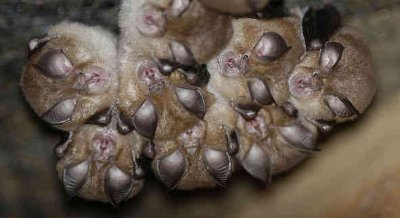 Temperature and light are important factors when bats select roosts. Roost preference depends on the bat species, the time of year and the breeding status of the bat. Male bats and non-breeding females tend to prefer cooler conditions throughout the year, but breeding females prefer warmer roosts in spring and summer when raising a baby bat places high demands on their energy levels. Breeding females cluster together to retain body heat, but they also gain 'free' heat from tree roosts in two ways, to help them get through this challenging time:
1. Selecting naturally warm sites, such as sheltered trees receiving some sunshine during the day.
2. Selecting highly insulated sites, such as a tree hole with a small space and thick wood surrounding it.
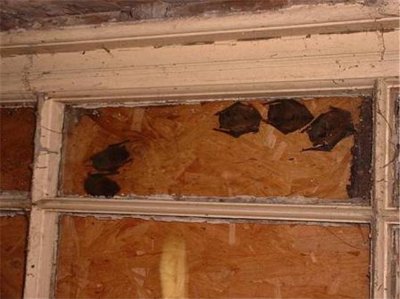
Buildings can be used by bats during any part of the year but are most likely to be present during the summer months. Whilst all species of British bat will at times make use of built structures, there are a number of species that are particularly linked to buildings.
Long-eared speciesDuring summer long-eared bats will use crevices in the roof structure and under the ridge during the day although they occasionally roost in the open within the roof void and frequently fly within the roof void. They can also be found in roofs during the winter. Long-eared bats tend to prefer older buildings.
Brandt’s and whiskeredThese species of bats are crevice dwellers and in the summer months may use crevices formed by the structure within a roof space but may enter roof spaces to fly around. They also make use of external features such as hanging tiles soffits, cavity walls and ridge tiles.
Leisler’s
Natterer’sIn summer Natterer's bat are frequently found in crevices in timbers of the substantial type often found in old barns but in other buildings too.
Cavity wallsSerotine, Leisler's and pipistrelle species all year round. Natterer’s, brown long-eared, Brandt’s and whiskered in summer.
External featuresPipistrelle species, Leisler’s, Brandt’s and whiskered during summer.
Unheated cellars – greater and lesser horseshoes in winter.
Solid wall with cracks and crevicesPipistrelle species especially in winter.
Bats and Buildings (Specialist Support Series) (143 KB) - 01/10/08
Information for professionals, such as builders, surveyors, architects, plumbers, roofers, pest technicians, double glazing installators and insulators.
This leaflet outlines the legislation which must be taken into account when working on trees.
This is intended as a guide for all those who might come across bats underground.
A good practice guide published by the Forestry Commission for England and Wales in partnership with BCT, CCW and English Nature (Natural England)